Autism is a
disorder of neural development characterized by impaired
social interaction and
communication,
and by restricted and repetitive behavior. The diagnostic criteria
require that symptoms become apparent before a child is three years old.
[2] Autism affects
information processing in the
brain by altering how nerve cells and their
synapses connect and organize; how this occurs is not well understood.
[3] It is one of three recognized disorders in the
autism spectrum (ASDs), the other two being
Asperger syndrome, which lacks delays in cognitive development and language, and
pervasive developmental disorder, not otherwise specified
(commonly abbreviated as PDD-NOS), which is diagnosed when the full set
of criteria for autism or Asperger syndrome are not met.
[4]
Autism has a strong genetic basis, although the
genetics of autism are complex and it is unclear whether ASD is explained more by rare
mutations, or by rare combinations of common genetic variants.
[5] In rare cases, autism is strongly associated with
agents that cause birth defects.
[6] Controversies surround other proposed environmental
causes, such as
heavy metals,
pesticides or childhood
vaccines;
[7] the vaccine hypotheses are biologically implausible and lack convincing scientific evidence.
[8] The
prevalence of autism is about 1–2 per 1,000 people worldwide, and the
Centers for Disease Control and Prevention (CDC) report 20 per 1,000 children in the United States are diagnosed with ASD as of 2012 (up from 11 per 1000 in 2008).
[7][9][10]
The number of people diagnosed with autism has been increasing
dramatically since the 1980s, partly due to changes in diagnostic
practice and government-subsidized financial incentives for named
diagnoses;
[10] the question of whether actual prevalence has increased is unresolved.
[11]
Parents usually notice signs in the first two years of their child's life.
[12] The signs usually develop gradually, but some autistic children first develop more normally and then
regress.
[13] Early behavioral or cognitive intervention can help autistic children gain self-care, social, and communication skills.
[12] Although there is no known cure,
[12] there have been reported cases of children who recovered.
[14] Not many children with autism live independently after reaching adulthood, though some become successful.
[15] An
autistic culture
has developed, with some individuals seeking a cure and others
believing autism should be accepted as a difference and not treated as a
disorder.
[16]
Characteristics
Autism is a highly variable
neurodevelopmental disorder[17] that first appears during infancy or childhood, and generally follows a steady course without
remission.
[18] Overt symptoms gradually begin after the age of six months, become established by age two or three years,
[19] and tend to continue through adulthood, although often in more muted form.
[20]
It is distinguished not by a single symptom, but by a characteristic
triad of symptoms: impairments in social interaction; impairments in
communication; and restricted interests and repetitive behavior. Other
aspects, such as atypical
eating, are also common but are not essential for diagnosis.
[21]
Autism's individual symptoms occur in the general population and appear
not to associate highly, without a sharp line separating pathologically
severe from common traits.
[22]
Social development
Social deficits distinguish autism and the related
autism spectrum disorders (ASD; see
Classification) from other developmental disorders.
[20]
People with autism have social impairments and often lack the intuition
about others that many people take for granted. Noted autistic
Temple Grandin described her inability to understand the
social communication of
neurotypicals, or people with normal
neural development, as leaving her feeling "like an anthropologist on Mars".
[23]
Unusual social development becomes apparent early in childhood.
Autistic infants show less attention to social stimuli, smile and look
at others less often, and respond less to their own name. Autistic
toddlers differ more strikingly from
social norms; for example, they have less
eye contact
and turn taking, and do not have the ability to use simple movements to
express themselves, such as the deficiency to point at things.
[24]
Three- to five-year-old autistic children are less likely to exhibit
social understanding, approach others spontaneously, imitate and respond
to emotions, communicate nonverbally, and take turns with others.
However, they do form
attachments to their primary
caregivers.
[25] Most autistic children display moderately less
attachment security than non-autistic children, although this difference disappears in children with higher mental development or less severe ASD.
[26] Older children and adults with ASD
perform worse on tests of face and emotion recognition.
[27]
Children with high-functioning autism suffer from more intense and
frequent loneliness compared to non-autistic peers, despite the common
belief that children with autism prefer to be alone. Making and
maintaining friendships often proves to be difficult for those with
autism. For them, the quality of friendships, not the number of friends,
predicts how lonely they feel. Functional friendships, such as those
resulting in invitations to parties, may affect the quality of life more
deeply.
[28]
There are many anecdotal reports, but few systematic studies, of
aggression and violence in individuals with ASD. The limited data
suggest that, in children with mental retardation, autism is associated
with aggression, destruction of property, and
tantrums.
A 2007 study interviewed parents of 67 children with ASD and reported
that about two-thirds of the children had periods of severe tantrums and
about one-third had a history of aggression, with tantrums
significantly more common than in non-autistic children with language
impairments.
[29]
A 2008 Swedish study found that, of individuals aged 15 or older
discharged from hospital with a diagnosis of ASD, those who committed
violent crimes were significantly more likely to have other
psychopathological conditions such as
psychosis.
[30]
Communication
About a third to a half of individuals with autism do not develop enough natural speech to meet their daily communication needs.
[31] Differences in communication may be present from the first year of life, and may include delayed onset of
babbling,
unusual gestures, diminished responsiveness, and vocal patterns that
are not synchronized with the caregiver. In the second and third years,
autistic children have less frequent and less diverse babbling,
consonants, words, and word combinations; their gestures are less often
integrated with words. Autistic children are less likely to make
requests or share experiences, and are more likely to simply repeat
others' words (
echolalia)
[32][33] or
reverse pronouns.
[34] Joint attention seems to be necessary for functional speech, and deficits in joint attention seem to distinguish infants with ASD:
[4] for example, they may look at a pointing hand instead of the pointed-at object,
[24][33] and they consistently fail to point at objects in order to comment on or share an experience.
[4] Autistic children may have difficulty with imaginative play and with developing symbols into language.
[32][33]
In a pair of studies, high-functioning autistic children aged 8–15
performed equally well as, and adults better than, individually matched
controls at basic language tasks involving vocabulary and spelling. Both
autistic groups performed worse than controls at complex language tasks
such as figurative language, comprehension and inference. As people are
often sized up initially from their basic language skills, these
studies suggest that people speaking to autistic individuals are more
likely to overestimate what their audience comprehends.
[35]
Repetitive behavior
Autistic individuals display many forms of repetitive or restricted
behavior, which the Repetitive Behavior Scale-Revised (RBS-R)
[36] categorizes as follows.
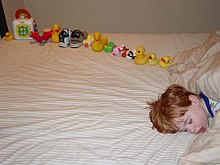
A young boy with autism who has arranged his toys in a row
- Stereotypy is repetitive movement, such as hand flapping, head rolling, or body rocking.
- Compulsive behavior is intended and appears to follow rules, such as arranging objects in stacks or lines.
- Sameness is resistance to change; for example, insisting that the furniture not be moved or refusing to be interrupted.
- Ritualistic behavior
involves an unvarying pattern of daily activities, such as an
unchanging menu or a dressing ritual. This is closely associated with
sameness and an independent validation has suggested combining the two
factors.[36]
- Restricted behavior is limited in focus, interest, or activity, such as preoccupation with a single television program, toy, or game.
- Self-injury includes movements that injure or can injure the person, such as eye poking, skin picking, hand biting, and head banging.[4] A 2007 study reported that self-injury at some point affected about 30% of children with ASD.[29]
No single repetitive or self-injurious behavior seems to be specific
to autism, but only autism appears to have an elevated pattern of
occurrence and severity of these behaviors.
[37]
Other symptoms
Autistic individuals may have symptoms that are independent of the diagnosis, but that can affect the individual or the family.
[21]
An estimated 0.5% to 10% of individuals with ASD show unusual
abilities, ranging from splinter skills such as the memorization of
trivia to the extraordinarily rare talents of prodigious
autistic savants.
[38] Many individuals with ASD show superior skills in perception and attention, relative to the general population.
[39] Sensory abnormalities are found in over 90% of those with autism, and are considered core features by some,
[40] although there is no good evidence that sensory symptoms differentiate autism from other developmental disorders.
[41]
Differences are greater for under-responsivity (for example, walking
into things) than for over-responsivity (for example, distress from loud
noises) or for sensation seeking (for example, rhythmic movements).
[42] An estimated 60%–80% of autistic people have motor signs that include
poor muscle tone,
poor motor planning, and
toe walking;
[40] deficits in motor coordination are pervasive across ASD and are greater in autism proper.
[43]
Unusual eating behavior occurs in about three-quarters of children
with ASD, to the extent that it was formerly a diagnostic indicator.
Selectivity is the most common problem, although eating rituals and food
refusal also occur;
[29] this does not appear to result in
malnutrition. Although some children with autism also have
gastrointestinal
(GI) symptoms, there is a lack of published rigorous data to support
the theory that autistic children have more or different GI symptoms
than usual;
[44] studies report conflicting results, and the relationship between GI problems and ASD is unclear.
[45]
Parents of children with ASD have higher levels of
stress.
[46]
Siblings of children with ASD report greater admiration of and less
conflict with the affected sibling than siblings of unaffected children
and were similar to siblings of children with
Down syndrome
in these aspects of the sibling relationship. However, they reported
lower levels of closeness and intimacy than siblings of children with
Down syndrome; siblings of individuals with ASD have greater risk of negative well-being and poorer sibling relationships as adults.
[47]
Classification
Autism is one of the five
pervasive developmental disorders
(PDD), which are characterized by widespread abnormalities of social
interactions and communication, and severely restricted interests and
highly repetitive behavior.
[18] These symptoms do not imply sickness, fragility, or emotional disturbance.
[20]
Of the five PDD forms,
Asperger syndrome is closest to autism in signs and likely causes;
Rett syndrome and
childhood disintegrative disorder share several signs with autism, but may have unrelated causes;
PDD not otherwise specified (PDD-NOS; also called
atypical autism) is diagnosed when the criteria are not met for a more specific disorder.
[48] Unlike with autism, people with Asperger syndrome have no substantial delay in
language development.
[2] The terminology of autism can be bewildering, with autism, Asperger syndrome and PDD-NOS often called the
autism spectrum disorders (ASD)
[12] or sometimes the
autistic disorders,
[49] whereas autism itself is often called
autistic disorder,
childhood autism, or
infantile autism. In this article,
autism refers to the classic autistic disorder; in clinical practice, though,
autism,
ASD, and
PDD are often used interchangeably.
[1] ASD, in turn, is a subset of the broader autism
phenotype, which describes individuals who may not have ASD but do have autistic-like
traits, such as avoiding eye contact.
[50]
The manifestations of autism cover a wide
spectrum, ranging from individuals with severe impairments—who may be silent,
mentally disabled,
and locked into hand flapping and rocking—to high functioning
individuals who may have active but distinctly odd social approaches,
narrowly focused interests, and verbose,
pedantic communication.
[51] Because the behavior spectrum is continuous, boundaries between diagnostic categories are necessarily somewhat arbitrary.
[40] Sometimes the syndrome is divided into low-, medium- or
high-functioning autism (LFA, MFA, and HFA), based on
IQ thresholds,
[52]
or on how much support the individual requires in daily life; these
subdivisions are not standardized and are controversial. Autism can also
be divided into
syndromal and non-syndromal autism; the syndromal autism is associated with severe or profound
mental retardation or a congenital syndrome with physical symptoms, such as
tuberous sclerosis.
[53] Although individuals with Asperger syndrome tend to perform better cognitively than those with autism, the extent of the
overlap between Asperger syndrome, HFA, and non-syndromal autism is unclear.
[54]
Some studies have reported diagnoses of autism in children due to a
loss of language or social skills, as opposed to a failure to make
progress, typically from 15 to 30 months of age. The validity of this
distinction remains controversial; it is possible that
regressive autism is a specific subtype,
[13][24][32][55] or that there is a continuum of behaviors between autism with and without regression.
[56]
Research into causes has been hampered by the inability to identify
biologically meaningful subgroups within the autistic population
[57] and by the traditional boundaries between the disciplines of
psychiatry,
psychology,
neurology and
pediatrics.
[58] Newer technologies such as
fMRI and
diffusion tensor imaging can help identify biologically relevant
phenotypes (observable traits) that can be viewed on
brain scans, to help further
neurogenetic studies of autism;
[59] one example is lowered activity in the
fusiform face area of the brain, which is associated with impaired perception of people versus objects.
[3] It has been proposed to classify autism using genetics as well as behavior.
[60]
Causes
It has long been presumed that there is a common cause at the
genetic, cognitive, and neural levels for autism's characteristic triad
of symptoms.
[61]
However, there is increasing suspicion that autism is instead a complex
disorder whose core aspects have distinct causes that often co-occur.
[61][62]
Autism has a strong genetic basis, although the
genetics of autism are complex and it is unclear whether ASD is explained more by rare
mutations with major effects, or by rare multigene interactions of common genetic variants.
[5][64] Complexity arises due to interactions among multiple genes, the environment, and
epigenetic factors which do not change
DNA but are heritable and influence
gene expression.
[20] Studies of twins suggest that
heritability
is 0.7 for autism and as high as 0.9 for ASD, and siblings of those
with autism are about 25 times more likely to be autistic than the
general population.
[40] However, most of the mutations that increase autism risk have not been identified. Typically, autism cannot be traced to a
Mendelian (single-gene) mutation or to a single
chromosome abnormality, and none of the genetic syndromes associated with ASDs have been shown to selectively cause ASD.
[5] Numerous candidate genes have been located, with only small effects attributable to any particular gene.
[5] The large number of autistic individuals with unaffected family members may result from
copy number variations—spontaneous
deletions or
duplications in genetic material during
meiosis.
[65]
Hence, a substantial fraction of autism cases may be traceable to
genetic causes that are highly heritable but not inherited: that is, the
mutation that causes the autism is not present in the parental genome.
[63]
Several lines of evidence point to
synaptic dysfunction as a cause of autism.
[3] Some rare mutations may lead to autism by disrupting some synaptic pathways, such as those involved with
cell adhesion.
[66]
Gene replacement studies in mice suggest that autistic symptoms are
closely related to later developmental steps that depend on activity in
synapses and on activity-dependent changes.
[67] All known
teratogens (agents that cause
birth defects) related to the risk of autism appear to act during the first eight weeks from
conception,
and though this does not exclude the possibility that autism can be
initiated or affected later, it is strong evidence that autism arises
very early in development.
[6]
Although evidence for other environmental causes is anecdotal and has not been confirmed by reliable studies,
[7] extensive searches are underway.
[68] Environmental factors that have been claimed to contribute to or exacerbate autism, or may be important in future research, include certain foods,
infectious disease,
heavy metals,
solvents,
diesel exhaust,
PCBs,
phthalates and
phenols used in
plastic products,
pesticides,
brominated flame retardants,
alcohol,
smoking,
illicit drugs,
vaccines,
[11] and
prenatal stress,
[69] although no links have been found, and some have been completely disproven.
Parents may first become aware of autistic symptoms in their child
around the time of a routine vaccination. This has led to unsupported
theories blaming
vaccine "overload", a
vaccine preservative, or the
MMR vaccine for causing autism.
[8] The latter theory was supported by a litigation-funded study that has since been shown to have been "an elaborate fraud".
[70] Although these theories lack convincing scientific evidence and are biologically implausible,
[8] parental concern about a potential vaccine link with autism has led to lower rates of
childhood immunizations,
outbreaks of previously controlled childhood diseases in some countries, and the preventable deaths of several children.
[71][72]
Mechanism
Autism's symptoms result from maturation-related changes in various
systems of the brain. How autism occurs is not well understood. Its
mechanism can be divided into two areas: the
pathophysiology of brain structures and processes associated with autism, and the
neuropsychological linkages between brain structures and behaviors.
[73] The behaviors appear to have multiple pathophysiologies.
[22]
Pathophysiology
Unlike many other brain disorders, such as
Parkinson's,
autism does not have a clear unifying mechanism at either the
molecular, cellular, or systems level; it is not known whether autism is
a few disorders caused by mutations converging on a few common
molecular pathways, or is (like intellectual disability) a large set of
disorders with diverse mechanisms.
[17] Autism appears to result from developmental factors that affect many or all functional brain systems,
[75] and to disturb the timing of brain development more than the final product.
[74] Neuroanatomical studies and the associations with
teratogens strongly suggest that autism's mechanism includes alteration of brain development soon after conception.
[6]
This anomaly appears to start a cascade of pathological events in the
brain that are significantly influenced by environmental factors.
[76]
Just after birth, the brains of autistic children tend to grow faster
than usual, followed by normal or relatively slower growth in childhood.
It is not known whether early overgrowth occurs in all autistic
children. It seems to be most prominent in brain areas underlying the
development of higher cognitive specialization.
[40] Hypotheses for the cellular and molecular bases of pathological early overgrowth include the following:
Interactions between the
immune system and the
nervous system begin early during the
embryonic stage
of life, and successful neurodevelopment depends on a balanced immune
response. Aberrant immune activity during critical periods of
neurodevelopment is possibly part of the mechanism of some forms of ASD.
[84]
Although some abnormalities in the immune system have been found in
specific subgroups of autistic individuals, it is not known whether
these abnormalities are relevant to or secondary to autism's disease
processes.
[85] As
autoantibodies are found in conditions other than ASD, and are not always present in ASD,
[86] the relationship between immune disturbances and autism remains unclear and controversial.
[78]
The relationship of
neurochemicals to autism is not well understood; several have been investigated, with the most evidence for the role of
serotonin and of genetic differences in its transport.
[3] The role of group I
metabotropic glutamate receptors (mGluR) in the pathogenesis of
fragile X syndrome,
the most common identified genetic cause of autism, has led to interest
in the possible implications for future autism research into this
pathway.
[87] Some data suggest an increase in several
growth hormones; other data argue for diminished
growth factors.
[88] Also, some
inborn errors of metabolism are associated with autism, but probably account for less than 5% of cases.
[89]
The
mirror neuron system
(MNS) theory of autism hypothesizes that distortion in the development
of the MNS interferes with imitation and leads to autism's core features
of social impairment and communication difficulties. The MNS operates
when an animal performs an action or observes another animal perform the
same action. The MNS may contribute to an individual's understanding of
other people by enabling the modeling of their behavior via embodied
simulation of their actions, intentions, and emotions.
[90]
Several studies have tested this hypothesis by demonstrating structural
abnormalities in MNS regions of individuals with ASD, delay in the
activation in the core circuit for imitation in individuals with
Asperger syndrome, and a correlation between reduced MNS activity and
severity of the syndrome in children with ASD.
[91] However, individuals with autism also have abnormal brain activation in many circuits outside the MNS
[92]
and the MNS theory does not explain the normal performance of autistic
children on imitation tasks that involve a goal or object.
[93]

Autistic individuals tend to use different areas of the brain (yellow) for a movement task compared to a control group (blue).
[94]
ASD-related patterns of low function and aberrant activation in the
brain differ depending on whether the brain is doing social or nonsocial
tasks.
[95] In autism there is evidence for reduced functional connectivity of the
default network, a large-scale brain network involved in social and emotional processing, with intact connectivity of the
task-positive network,
used in sustained attention and goal-directed thinking. In people with
autism the two networks are not negatively correlated in time,
suggesting an imbalance in toggling between the two networks, possibly
reflecting a disturbance of
self-referential thought.
[96] A 2008 brain-imaging study found a specific pattern of signals in the
cingulate cortex which differs in individuals with ASD.
[97]
The underconnectivity theory of autism hypothesizes that autism is
marked by underfunctioning high-level neural connections and
synchronization, along with an excess of low-level processes.
[98] Evidence for this theory has been found in
functional neuroimaging studies on autistic individuals
[35] and by a
brainwave study that suggested that adults with ASD have local overconnectivity in the
cortex and weak functional connections between the
frontal lobe and the rest of the cortex.
[99] Other evidence suggests the underconnectivity is mainly within each
hemisphere of the cortex and that autism is a disorder of the
association cortex.
[100]
From studies based on
event-related potentials,
transient changes to the brain's electrical activity in response to
stimuli, there is considerable evidence for differences in autistic
individuals with respect to attention, orientiation to auditory and
visual stimuli, novelty detection, language and face processing, and
information storage; several studies have found a preference for
nonsocial stimuli.
[101] For example,
magnetoencephalography studies have found evidence in autistic children of delayed responses in the brain's processing of auditory signals.
[102]
In the genetic area, relations have been found between autism and
schizophrenia
based on duplications and deletions of chromosomes; research showed
that schizophrenia and autism are significantly more common in
combination with
1q21.1 deletion syndrome.
Research on autism/schizophrenia relations for chromosome 15 (15q13.3),
chromosome 16 (16p13.1) and chromosome 17 (17p12) are inconclusive.
[103]
Neuropsychology
Two major categories of
cognitive theories have been proposed about the links between autistic brains and behavior.
The first category focuses on deficits in
social cognition. The
empathizing–systemizing theory
postulates that autistic individuals can systemize—that is, they can
develop internal rules of operation to handle events inside the
brain—but are less effective at empathizing by handling events generated
by other agents. An extension, the extreme male brain theory,
hypothesizes that autism is an extreme case of the male brain, defined
psychometrically as individuals in whom systemizing is better than
empathizing;
[104]
this extension is controversial, as many studies contradict the idea
that baby boys and girls respond differently to people and objects.
[105]
These theories are somewhat related to the earlier
theory of mind
approach, which hypothesizes that autistic behavior arises from an
inability to ascribe mental states to oneself and others. The theory of
mind hypothesis is supported by autistic children's atypical responses
to the
Sally–Anne test for reasoning about others' motivations,
[104] and the mirror neuron system theory of autism described in
Pathophysiology maps well to the hypothesis.
[91]
However, most studies have found no evidence of impairment in autistic
individuals' ability to understand other people's basic intentions or
goals; instead, data suggests that impairments are found in
understanding more complex social emotions or in considering others'
viewpoints.
[106]
The second category focuses on nonsocial or general processing: the
executive functions such as
working memory, planning,
inhibition. In his review, Kenworthy states that "the claim of
executive dysfunction
as a causal factor in autism is controversial", however, "it is clear
that executive dysfunction plays a role in the social and cognitive
deficits observed in individuals with autism".
[107]
Tests of core executive processes such as eye movement tasks indicate
improvement from late childhood to adolescence, but performance never
reaches typical adult levels.
[108] A strength of the theory is predicting stereotyped behavior and narrow interests;
[109] two weaknesses are that executive function is hard to measure
[107] and that executive function deficits have not been found in young autistic children.
[27]
Weak central coherence theory
hypothesizes that a limited ability to see the big picture underlies
the central disturbance in autism. One strength of this theory is
predicting special talents and peaks in performance in autistic people.
[110] A related theory—enhanced perceptual functioning—focuses more on the superiority of locally oriented and
perceptual operations in autistic individuals.
[111] These theories map well from the underconnectivity theory of autism.
Neither category is satisfactory on its own; social cognition
theories poorly address autism's rigid and repetitive behaviors, while
the nonsocial theories have difficulty explaining social impairment and
communication difficulties.
[62] A combined theory based on multiple deficits may prove to be more useful.
[112]
Screening
About half of parents of children with ASD notice their child's
unusual behaviors by age 18 months, and about four-fifths notice by age
24 months.
[55] According to an article in the
Journal of Autism and Developmental Disorders,
failure to meet any of the following milestones "is an absolute
indication to proceed with further evaluations. Delay in referral for
such testing may delay early diagnosis and treatment and affect the
long-term outcome".
[21]
- No babbling by 12 months.
- No gesturing (pointing, waving, etc.) by 12 months.
- No single words by 16 months.
- No two-word (spontaneous, not just echolalic) phrases by 24 months.
- Any loss of any language or social skills, at any age.
US and Japanese practice is to
screen
all children for ASD at 18 and 24 months, using autism-specific formal
screening tests. In contrast, in the UK, children whose families or
doctors recognize possible signs of autism are screened. It is not known
which approach is more effective.
[3]
Screening tools include the Modified Checklist for Autism in Toddlers
(M-CHAT), the Early Screening of Autistic Traits Questionnaire, and the
First Year Inventory; initial data on M-CHAT and its predecessor CHAT on
children aged 18–30 months suggests that it is best used in a clinical
setting and that it has low
sensitivity (many false-negatives) but good
specificity (few false-positives).
[55]
It may be more accurate to precede these tests with a broadband
screener that does not distinguish ASD from other developmental
disorders.
[113] Screening tools designed for one culture's norms for behaviors like eye contact may be inappropriate for a different culture.
[114] Although
genetic screening for autism is generally still impractical, it can be considered in some cases, such as children with neurological symptoms and
dysmorphic features.
[115]
Diagnosis
Diagnosis is based on behavior, not cause or mechanism.
[22][116] Autism is defined in the
DSM-IV-TR
as exhibiting at least six symptoms total, including at least two
symptoms of qualitative impairment in social interaction, at least one
symptom of qualitative impairment in communication, and at least one
symptom of restricted and repetitive behavior. Sample symptoms include
lack of social or emotional reciprocity, stereotyped and repetitive use
of language or
idiosyncratic language,
and persistent preoccupation with parts of objects. Onset must be prior
to age three years, with delays or abnormal functioning in either
social interaction, language as used in social communication, or
symbolic or imaginative play. The disturbance must not be better
accounted for by
Rett syndrome or
childhood disintegrative disorder.
[2] ICD-10 uses essentially the same definition.
[18]
Several diagnostic instruments are available. Two are commonly used in autism research: the
Autism Diagnostic Interview-Revised (ADI-R) is a semistructured parent interview, and the
Autism Diagnostic Observation Schedule (ADOS)
[117] uses observation and interaction with the child. The
Childhood Autism Rating Scale (CARS) is used widely in clinical environments to assess severity of autism based on observation of children.
[24]
A
pediatrician
commonly performs a preliminary investigation by taking developmental
history and physically examining the child. If warranted, diagnosis and
evaluations are conducted with help from ASD specialists, observing and
assessing cognitive, communication, family, and other factors using
standardized tools, and taking into account any associated
medical conditions.
[118] A pediatric
neuropsychologist is often asked to assess behavior and cognitive skills, both to aid diagnosis and to help recommend educational interventions.
[119] A
differential diagnosis for ASD at this stage might also consider
mental retardation,
hearing impairment, and a
specific language impairment[118] such as
Landau–Kleffner syndrome.
[120] The presence of autism can make it harder to diagnose coexisting psychiatric disorders such as
depression.
[121]
Clinical genetics evaluations are often done once ASD is diagnosed, particularly when other symptoms already suggest a genetic cause.
[1] Although genetic technology allows clinical geneticists to link an estimated 40% of cases to genetic causes,
[122] consensus guidelines in the US and UK are limited to high-resolution chromosome and
fragile X testing.
[1] A
genotype-first model of diagnosis has been proposed, which would routinely assess the genome's copy number variations.
[123]
As new genetic tests are developed several ethical, legal, and social
issues will emerge. Commercial availability of tests may precede
adequate understanding of how to use test results, given the complexity
of autism's genetics.
[124] Metabolic and
neuroimaging tests are sometimes helpful, but are not routine.
[1]
ASD can sometimes be diagnosed by age 14 months, although diagnosis
becomes increasingly stable over the first three years of life: for
example, a one-year-old who meets diagnostic criteria for ASD is less
likely than a three-year-old to continue to do so a few years later.
[55]
In the UK the National Autism Plan for Children recommends at most 30
weeks from first concern to completed diagnosis and assessment, though
few cases are handled that quickly in practice.
[118]
A 2009 US study found the average age of formal ASD diagnosis was 5.7
years, far above recommendations, and that 27% of children remained
undiagnosed at age 8 years.
[125]
Although the symptoms of autism and ASD begin early in childhood, they
are sometimes missed; years later, adults may seek diagnoses to help
them or their friends and family understand themselves, to help their
employers make adjustments, or in some locations to claim disability
living allowances or other benefits.
[126]
Underdiagnosis and overdiagnosis are problems in marginal cases, and
much of the recent increase in the number of reported ASD cases is
likely due to changes in diagnostic practices. The increasing popularity
of drug treatment options and the expansion of benefits has given
providers incentives to diagnose ASD, resulting in some overdiagnosis of
children with uncertain symptoms. Conversely, the cost of screening and
diagnosis and the challenge of obtaining payment can inhibit or delay
diagnosis.
[127] It is particularly hard to diagnose autism among the
visually impaired,
partly because some of its diagnostic criteria depend on vision, and
partly because autistic symptoms overlap with those of common blindness
syndromes or
blindisms.
[128]
Management
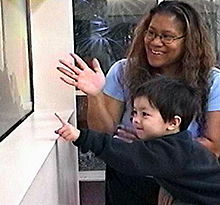
A three-year-old with autism points to fish in an aquarium, as part of
an experiment on the effect of intensive shared-attention training on
language development.
[94]
The main goals when treating children with autism are to lessen
associated deficits and family distress, and to increase quality of life
and functional independence. No single treatment is best and treatment
is typically tailored to the child's needs.
[12] Families and the educational system are the main resources for treatment.
[3] Studies of interventions have methodological problems that prevent definitive conclusions about
efficacy.
[129] Although many
psychosocial
interventions have some positive evidence, suggesting that some form of
treatment is preferable to no treatment, the methodological quality of
systematic reviews
of these studies has generally been poor, their clinical results are
mostly tentative, and there is little evidence for the relative
effectiveness of treatment options.
[130] Intensive, sustained
special education programs and
behavior therapy early in life can help children acquire self-care, social, and job skills,
[12] and often improve functioning and decrease symptom severity and maladaptive behaviors;
[131] claims that intervention by around age three years is crucial are not substantiated.
[132] Available approaches include
applied behavior analysis (ABA), developmental models,
structured teaching,
speech and language therapy,
social skills therapy, and
occupational therapy.
[12]
Educational interventions can be effective to varying degrees in most children:
intensive ABA treatment has demonstrated effectiveness in enhancing global functioning in preschool children
[133] and is well-established for improving intellectual performance of young children.
[131]
Neuropsychological reports are often poorly communicated to educators,
resulting in a gap between what a report recommends and what education
is provided.
[119] It is not known whether treatment programs for children lead to significant improvements after the children grow up,
[131] and the limited research on the effectiveness of adult residential programs shows mixed results.
[134]
The appropriateness of including children with varying severity of
autism spectrum disorders in the general education population is a
subject of current debate among educators and researchers.
[135]
Many medications are used to treat ASD symptoms that interfere with
integrating a child into home or school when behavioral treatment fails.
[20][136] More than half of US children diagnosed with ASD are prescribed
psychoactive drugs or
anticonvulsants, with the most common drug classes being
antidepressants,
stimulants, and
antipsychotics.
[137] Aside from antipsychotics,
[138] there is scant reliable research about the effectiveness or safety of drug treatments for adolescents and adults with ASD.
[139] A person with ASD may respond atypically to medications, the medications can have
adverse effects,
[12] and no known medication relieves autism's core symptoms of social and communication impairments.
[140] Experiments in mice have reversed or reduced some symptoms related to autism by replacing or modulating gene function,
[67][87] suggesting the possibility of targeting therapies to specific rare mutations known to cause autism.
[66][141]
Although many
alternative therapies and interventions are available, few are supported by scientific studies.
[27][142] Treatment approaches have little empirical support in
quality-of-life contexts, and many programs focus on success measures that lack predictive validity and real-world relevance.
[28]
Scientific evidence appears to matter less to service providers than
program marketing, training availability, and parent requests.
[143]
Some alternative treatments may place the child at risk. A 2008 study
found that compared to their peers, autistic boys have significantly
thinner bones if on
casein-free diets;
[144] in 2005, botched
chelation therapy killed a five-year-old child with autism.
[145]
Treatment is expensive; indirect costs are more so. For someone born
in 2000, a US study estimated an average lifetime cost of $3.94 million (
net present value in 2013 dollars, inflation-adjusted from 2003 estimate),
[146] with about 10%
medical care, 30% extra education and other care, and 60% lost economic productivity.
[147]
Publicly supported programs are often inadequate or inappropriate for a
given child, and unreimbursed out-of-pocket medical or therapy expenses
are associated with likelihood of family financial problems;
[148] one 2008 US study found a 14% average loss of annual income in families of children with ASD,
[149] and a related study found that ASD is associated with higher probability that
child care problems will greatly affect parental employment.
[150]
US states increasingly require private health insurance to cover autism
services, shifting costs from publicly funded education programs to
privately funded health insurance.
[151] After childhood, key treatment issues include residential care, job training and placement, sexuality, social skills, and
estate planning.
[152]
Prognosis
There is no known cure.
[3][12] Children recover occasionally, so that they lose their diagnosis of ASD;
[14] this occurs sometimes after intensive treatment and sometimes not. It is not known how often recovery happens;
[131] reported rates in unselected samples of children with ASD have ranged from 3% to 25%.
[14]
Most autistic children can acquire language by age 5 or younger, though
a few have developed communication skills in later years.
[153] Most children with autism lack
social support, meaningful relationships, future employment opportunities or
self-determination.
[28] Although core difficulties tend to persist, symptoms often become less severe with age.
[20]
Few high-quality studies address long-term
prognosis. Some adults show modest improvement in communication skills, but a few decline; no study has focused on autism after midlife.
[154] Acquiring language before age six, having an
IQ above 50, and having a marketable skill all predict better outcomes;
independent living is unlikely with severe autism.
[155]
A 2004 British study of 68 adults who were diagnosed before 1980 as
autistic children with IQ above 50 found that 12% achieved a high level
of independence as adults, 10% had some friends and were generally in
work but required some support, 19% had some independence but were
generally living at home and needed considerable support and supervision
in daily living, 46% needed specialist residential provision from
facilities specializing in ASD with a high level of support and very
limited autonomy, and 12% needed high-level hospital care.
[15]
A 2005 Swedish study of 78 adults that did not exclude low IQ found
worse prognosis; for example, only 4% achieved independence.
[156]
A 2008 Canadian study of 48 young adults diagnosed with ASD as
preschoolers found outcomes ranging through poor (46%), fair (32%), good
(17%), and very good (4%); 56% of these young adults had been employed
at some point during their lives, mostly in volunteer, sheltered or
part-time work.
[157]
Changes in diagnostic practice and increased availability of effective
early intervention make it unclear whether these findings can be
generalized to recently diagnosed children.
[11]
Epidemiology

Reports of autism cases per 1,000 children grew dramatically in the US
from 1996 to 2007. It is unknown how much, if any, growth came from
changes in autism's
prevalence.
Most recent
reviews tend to estimate a prevalence of 1–2 per 1,000 for autism and close to 6 per 1,000 for ASD,
[11] and 11 per 1,000 children in the United States for ASD as of 2008;
[9][158] because of inadequate data, these numbers may underestimate ASD's true prevalence.
[1] PDD-NOS's prevalence has been estimated at 3.7 per 1,000, Asperger syndrome at roughly 0.6 per 1,000, and
childhood disintegrative disorder at 0.02 per 1,000.
[159]
The number of reported cases of autism increased dramatically in the
1990s and early 2000s. This increase is largely attributable to changes
in diagnostic practices, referral patterns, availability of services,
age at diagnosis, and public awareness,
[159][160] though unidentified environmental risk factors cannot be ruled out.
[7] The available evidence does not rule out the possibility that autism's true prevalence has increased;
[159]
a real increase would suggest directing more attention and funding
toward changing environmental factors instead of continuing to focus on
genetics.
[68]
Boys are at higher risk for ASD than girls. The sex ratio averages
4.3:1 and is greatly modified by cognitive impairment: it may be close
to 2:1 with mental retardation and more than 5.5:1 without.
[11]
Although the evidence does not implicate any single pregnancy-related
risk factor as a cause of autism, the risk of autism is associated with
advanced age in either parent, and with diabetes, bleeding, and use of
psychiatric drugs in the mother during pregnancy.
[161]
The risk is greater with older fathers than with older mothers; two
potential explanations are the known increase in mutation burden in
older sperm, and the hypothesis that men marry later if they carry
genetic liability and show some signs of autism.
[40] Most professionals believe that race, ethnicity, and socioeconomic background do not affect the occurrence of autism.
[162]
Several other conditions are common in children with autism.
[3] They include:
- Genetic disorders. About 10–15% of autism cases have an identifiable Mendelian (single-gene) condition, chromosome abnormality, or other genetic syndrome,[163] and ASD is associated with several genetic disorders.[164]
- Mental retardation.
The percentage of autistic individuals who also meet criteria for
mental retardation has been reported as anywhere from 25% to 70%, a wide
variation illustrating the difficulty of assessing autistic
intelligence.[165] In comparison, for PDD-NOS the association with mental retardation is much weaker,[166] and by definition, the diagnosis of Asperger's excludes mental retardation.[167]
- Anxiety disorders
are common among children with ASD; there are no firm data, but studies
have reported prevalences ranging from 11% to 84%. Many anxiety
disorders have symptoms that are better explained by ASD itself, or are
hard to distinguish from ASD's symptoms.[168]
- Epilepsy, with variations in risk of epilepsy due to age, cognitive level, and type of language disorder.[169]
- Several metabolic defects, such as phenylketonuria, are associated with autistic symptoms.[89]
- Minor physical anomalies are significantly increased in the autistic population.[170]
- Preempted diagnoses. Although the DSM-IV rules out concurrent diagnosis of many other conditions along with autism, the full criteria for Attention deficit hyperactivity disorder (ADHD), Tourette syndrome, and other of these conditions are often present and these comorbid diagnoses are increasingly accepted.[171]
- Sleep problems affect about two-thirds of individuals with ASD at some point in childhood. These most commonly include symptoms of insomnia such as difficulty in falling asleep, frequent nocturnal awakenings,
and early morning awakenings. Sleep problems are associated with
difficult behaviors and family stress, and are often a focus of clinical
attention over and above the primary ASD diagnosis.[172]
History
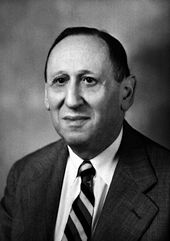
Leo Kanner introduced the label
early infantile autism in 1943.
A few examples of autistic symptoms and treatments were described long before autism was named. The
Table Talk of
Martin Luther, compiled by his notetaker, Mathesius, contains the story of a 12-year-old boy who may have been severely autistic.
[173]
Luther reportedly thought the boy was a soulless mass of flesh
possessed by the devil, and suggested that he be suffocated, although a
later critic has cast doubt on the veracity of this report.
[174]
The earliest well-documented case of autism is that of Hugh Blair of
Borgue, as detailed in a 1747 court case in which his brother
successfully petitioned to annul Blair's marriage to gain Blair's
inheritance.
[175] The
Wild Boy of Aveyron, a
feral child caught in 1798, showed several signs of autism; the medical student
Jean Itard treated him with a behavioral program designed to help him form social attachments and to induce speech via imitation.
[176]
The
New Latin word
autismus (English translation
autism) was coined by the
Swiss psychiatrist
Eugen Bleuler in 1910 as he was defining symptoms of
schizophrenia. He derived it from the Greek word
autós (αὐτός, meaning
self),
and used it to mean morbid self-admiration, referring to "autistic
withdrawal of the patient to his fantasies, against which any influence
from outside becomes an intolerable disturbance".
[177]
The word
autism first took its modern sense in 1938 when
Hans Asperger of the
Vienna University Hospital adopted Bleuler's terminology
autistic psychopaths in a lecture in German about
child psychology.
[178] Asperger was investigating an ASD now known as
Asperger syndrome, though for various reasons it was not widely recognized as a separate diagnosis until 1981.
[176] Leo Kanner of the
Johns Hopkins Hospital first used
autism in its modern sense in English when he introduced the label
early infantile autism in a 1943 report of 11 children with striking behavioral similarities.
[34]
Almost all the characteristics described in Kanner's first paper on the
subject, notably "autistic aloneness" and "insistence on sameness", are
still regarded as typical of the autistic spectrum of disorders.
[62] It is not known whether Kanner derived the term independently of Asperger.
[179]
Kanner's reuse of
autism led to decades of confused terminology like
infantile schizophrenia, and child psychiatry's focus on maternal deprivation led to misconceptions of autism as an infant's response to "
refrigerator mothers".
Starting in the late 1960s autism was established as a separate
syndrome by demonstrating that it is lifelong, distinguishing it from
mental retardation and schizophrenia and from other developmental
disorders, and demonstrating the benefits of involving parents in active
programs of therapy.
[180]
As late as the mid-1970s there was little evidence of a genetic role in
autism; now it is thought to be one of the most heritable of all
psychiatric conditions.
[181] Although the rise of parent organizations and the destigmatization of childhood ASD have deeply affected how we view ASD,
[176] parents continue to feel
social stigma in situations where their autistic children's behaviors are perceived negatively by others,
[182] and many
primary care physicians and
medical specialists still express some beliefs consistent with outdated autism research.
[183]
The
Internet
has helped autistic individuals bypass nonverbal cues and emotional
sharing that they find so hard to deal with, and has given them a way to
form online communities and work remotely.
[184] Sociological and cultural aspects of autism have developed: some in the community seek a cure, while others believe that autism is simply another way of being.
[16][185]
 Petechiae & Purpura


